PipeNex | Sensing Engine
Pipenex Sensing Engine for Midstream Operations
The PipeNex Sensing Engine is designed to capture physical conditions that matter across midstream operations. It organizes measurements such as pressure, flow, and temperature with asset identity, operating mode, and time context, then checks the quality of those observations before they are used for operational analysis. The result is a more structured view of pipeline and facility conditions for review by operations, instrumentation, and reliability teams.
Operational Information
Turn Field Measurements into Usable Operational Information
Midstream systems move and handle products through interconnected pipelines, facilities, and equipment. A measurement has limited value when it is separated from the asset that produced it, the operating condition at the time, or the quality of the instrument and data path. The Sensing Engine addresses this information layer by organizing readings with the context needed to interpret them.
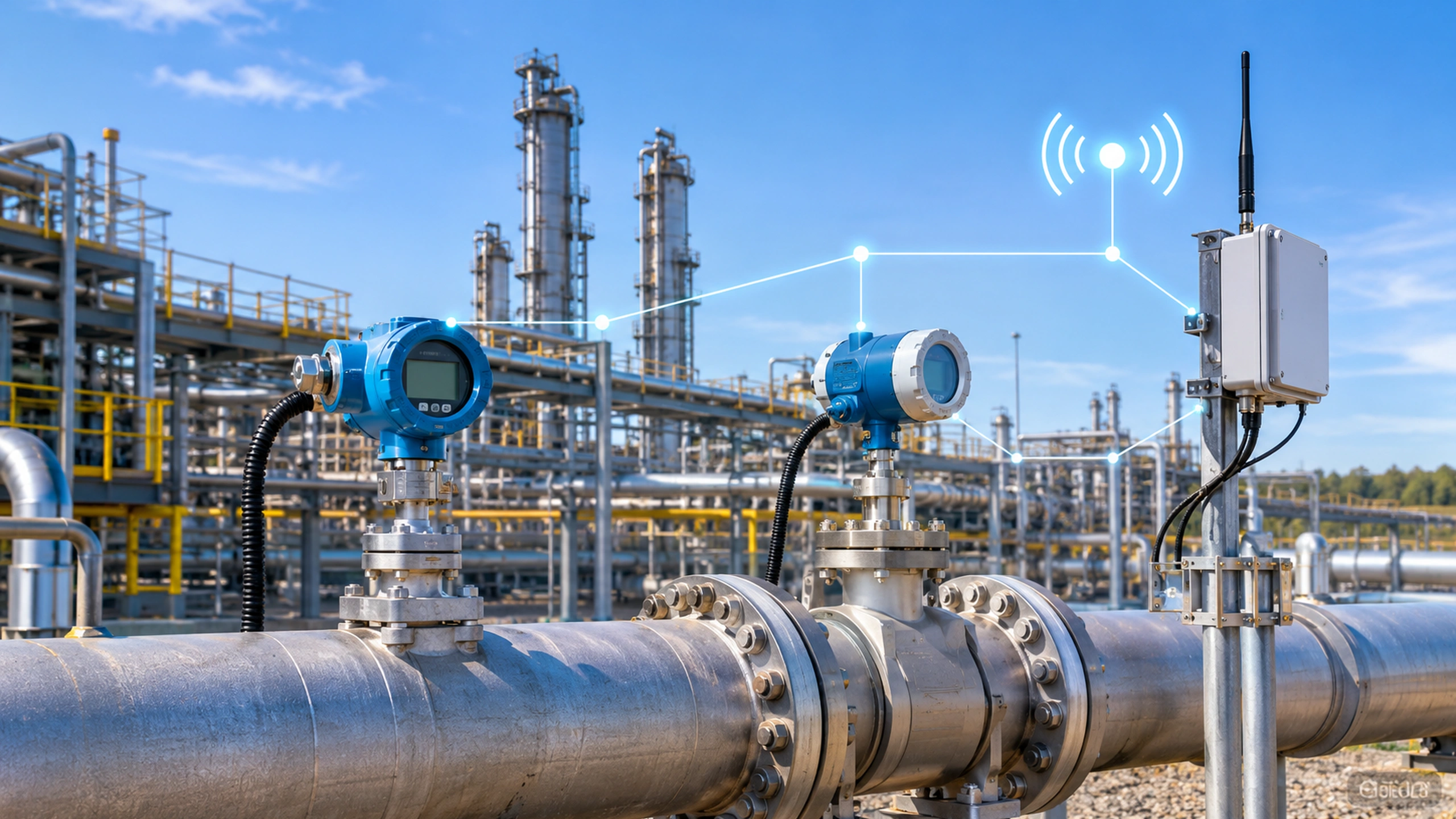
For a pipeline segment, pump station, compressor station, or metering facility, a sensing plan may include pressure, flow, and temperature measurements. Vibration, electrical, or environmental measurements may also be relevant where the equipment, operating question, and available instrumentation justify their use. These are candidate measurement categories, not a statement that PipeNex currently supports a particular sensor or installation.
Sensing Capabilities
What the Sensing Engine Handles
Condition, Process, and Environmental Variables
The measurement set should follow the operating question. Pressure and flow can help describe process conditions; temperature can add context to product handling and equipment operation. Vibration or electrical measurements may be considered for selected rotating or powered equipment. Environmental measurements should be included only when they are relevant to the facility, the equipment, or the operating decision being evaluated.
Measurement Acquisition and Context
A usable measurement record needs more than a value. The design should define the measurement point, associated asset, engineering unit, sampling interval, event timestamp, ingestion timestamp, operating mode, and sensor-health or quality status. Placement and sampling decisions should reflect process dynamics, instrument range, access for maintenance, communications availability, and the response time required by the intended use.
Calibration requirements and time alignment must be documented for each selected measurement. Where readings arrive through gateways or other intermediary systems, the data path should preserve source timestamps and identify delayed or out-of-order delivery rather than silently treating arrival time as measurement time.
Sensor and Data Quality Checks
Field data can be incomplete or misleading. The sensing workflow should account for missing readings, duplicate records, outliers, sensor drift, failed instruments, stale values, unit mismatches, and timestamp inconsistencies. Quality flags can distinguish accepted observations from values that require review, substitution, or exclusion. A flagged value should not be treated as a confirmed process condition without an appropriate check.
Operational State
From Raw Signals to an Operational State View
Raw signals are the values or waveforms captured by an instrument. Derived features are calculated from those signals, such as a time-window average, rate of change, vibration statistic, or deviation from an established baseline. An operational state view combines these measurements and features with asset identity, time, operating mode, and data-quality information.
This distinction matters in midstream operations. A pressure reading is a measured value at a defined point and time. A statement that a pipeline segment is experiencing an abnormal condition is an interpretation that depends on context, limits, comparison data, and review. The sensing layer should preserve the original observation and make the basis of any derived value traceable.
Trends and threshold conditions can support operator review. More advanced anomaly analysis belongs to the downstream decision function and requires representative data, an agreed baseline, and evaluation under relevant operating modes. The Sensing Engine supplies qualified observations; it does not by itself establish a diagnosis, predict a failure, or authorize a control action.
Illustrative Midstream Workflow
Example Measurement Workflow in a Midstream Facility
Consider a conceptual monitoring workflow at a pump station. Pressure, flow, and selected equipment-condition readings are associated with the relevant asset and time. The acquisition process records units and sampling intervals, while quality checks identify missing, stale, or implausible observations. Operations or reliability personnel can then review the measurement history alongside the station’s operating mode and other available records.
This example describes a possible workflow for evaluation, not a PipeNex customer deployment or a verified product demonstration. The appropriate instruments, measurement ranges, sample rates, alarm limits, and interfaces must be defined through site-specific engineering review.
Measurement Specifications
Measurement Details That Should Be Defined Before a Pilot
A practical evaluation begins with a measurement specification for each asset class and operating question. At minimum, document:
- Asset or measurement-point identifier and physical location.
- Measured variable, instrument type, engineering unit, and expected measurement range.
- Sampling interval, timestamp source, time zone, and time-alignment method.
- Calibration method, calibration interval, and available calibration records.
- Data transport path, connectivity assumptions, buffering behavior, and expected delivery delay.
- Quality flags and handling rules for missing, duplicate, stale, out-of-range, or suspect readings.
- Operating modes and relevant process conditions for interpreting the measurement.
- Responsible operations, instrumentation, and reliability roles for review and follow-up.
Evaluation and Validation
How to Evaluate Sensing Quality
Evaluation should measure whether the sensing design captures the information required for the selected workflow. Useful measures may include observation completeness, missing-data frequency, duplicate-event frequency, timestamp alignment error, out-of-range rate, sensor fault detection, calibration status, and the time required to investigate questionable readings. Define each measure’s unit, denominator, time window, and exclusion rules before testing.
A controlled or simulated dataset can help test data handling and quality rules, but it does not establish calibrated field performance. A field pilot must assess actual instrument behavior, installation conditions, communications, operating variation, and the ability of site personnel to verify and act on findings.
Connected Architecture
How Sensing Connects to the Other Engines
Sensing is one function within the wider Physical AI and Artificial Intelligence of Things (AIoT) architecture. The Identification Engine associates observations with the correct asset or measurement point. The Sensing Engine captures and qualifies physical measurements. The AI Decision Engine can evaluate qualified information against rules or analytical methods. Where a physical response is in scope, the Physical AI Action Engine addresses authorization, equipment interfaces, and outcome verification.
Explore the Identification Engine , AI Decision Engine , and Condition Monitoring pages for related functions and applications.
Explore PipeNex
Related Pages
Identification Engine
AI Decision Engine
Condition Monitoring
Identification and Sensing Hardware
Sensor Selection
Contact PipeNex
Connect With PipeNex
Discuss a Midstream Sensing Requirement
Every sensing application depends on the asset, process boundary, measurement objective, and operating conditions. Share the equipment or facility involved, the variables of interest, the data sources currently available, and the operational question your team needs to answer. PipeNex can use that context to identify the technical requirements and evidence needed for a meaningful evaluation.
Discuss your midstream sensing application.